Last week I was lucky enough to be invited to another wine tasting event. This one was by Vinoa. S and R first met Cyrus and Greg as they were launching Vinoa at a food festival in London. After chatting to them for about 10 minutes, S and R were in love with the concept and promptly signed up for a three month trial subscription.

Vinoa is a fabulous way to discover artisan wines from around the world. Every month you get a tasting box with four 50 ml (the international standard tasting size) bottles of wine. While tasting, you can also learn about the wine with an interactive online guide. All four wines used to be of a common region, but the concept has recently changed to be more fun with the four revolving around a topical theme. For example, the most recent was the Rugby World Cup.
Anyway, enough of the background and on to the tasting!
For their first ever tasting event, they decided to go a little off piste and explore the growing popularity of biodynamic wines. So, the big question in my mind, and perhaps in yours too, is what really is biodynamic? Many people think it is a load of superstitious nonsense based on moon cycles. S’ scientific mind was completely skeptical, but, as usual, curious and open-minded enough to listen to the arguments. It turns out that it is about spiritual tuning in to life-force and moon cycles, but it is also about ecological self-sufficiency and a return to an artisan craft. Whether you believe in the spiritual side or not, those other reasons are worthy. Here is a great quote from Ray Isle, managing editor of Wine & Spirit magazine:
“It’s kind of a no-brainer as a consumer. If you buy wines from producers who are biodynamic, you’re getting wines made (a) without pesticides and other inimical chemical whatnots, (b) with meticulous attention to detail in the vineyard, and (c) by growers who really believe that a vineyard’s character should be expressed in the wine. So what if they also think burying cow horns full of manure will help them channel new life forces from the cosmos?”
All up we tasted 7 wines:

Casa Coste Piane, Prosecco di Conegliano, 2012 (organic)
This Prosecco was a lovely way to start the evening. The grapes are from old vines, on average 60 years old. It’s made in the traditional Champagne method with the second fermentation taking place in the bottle, rather than in the tank. However, unlike Champagne, they don’t add yeast and sugar, and rely instead on the indigenous yeast already contained in the wine. It was nice and dry with a low to medium acidity and surprisingly easy to drink!
Le Petit Tetu, Côte de Beaune, Jean-Marie Berrux, 2012 (biodynamic)
I love the name of this wine, it translates as “the little pig-headed one”! It is a Chardonnay, but not like any you have ever tasted before. In appearance, it is very cloudy as they do not clarify the wine. In taste, it is unexpectedly like freshly squeezed, slightly tart apple juice. At first there is a slight musty taste and high acidity. After the acidity drops away, some creaminess then comes through. This is the kind of wine you will love or hate! The new friends I made were equally divided in their opinions.
Ageno, La Stoppa, Emilia Romagna, Elena Pataloni, 2010 (organic)
This is another very unusual white wine. Appropriately for the time of year, the colour had a halloween twist. Yes, it was orange! Maceration on the skins for 30 days does this trick. To put this into perspective, rosé wine made in this traditional manner is only in contact with the skins for up to three days to get the colour. The nose was deceptively sweet; there was absolutely no sweetness on the palate. In contrast (though, in hindsight, to be expected from the amount of contact with the skins) it was hugely tannic. Definitely something to be drunk with food.
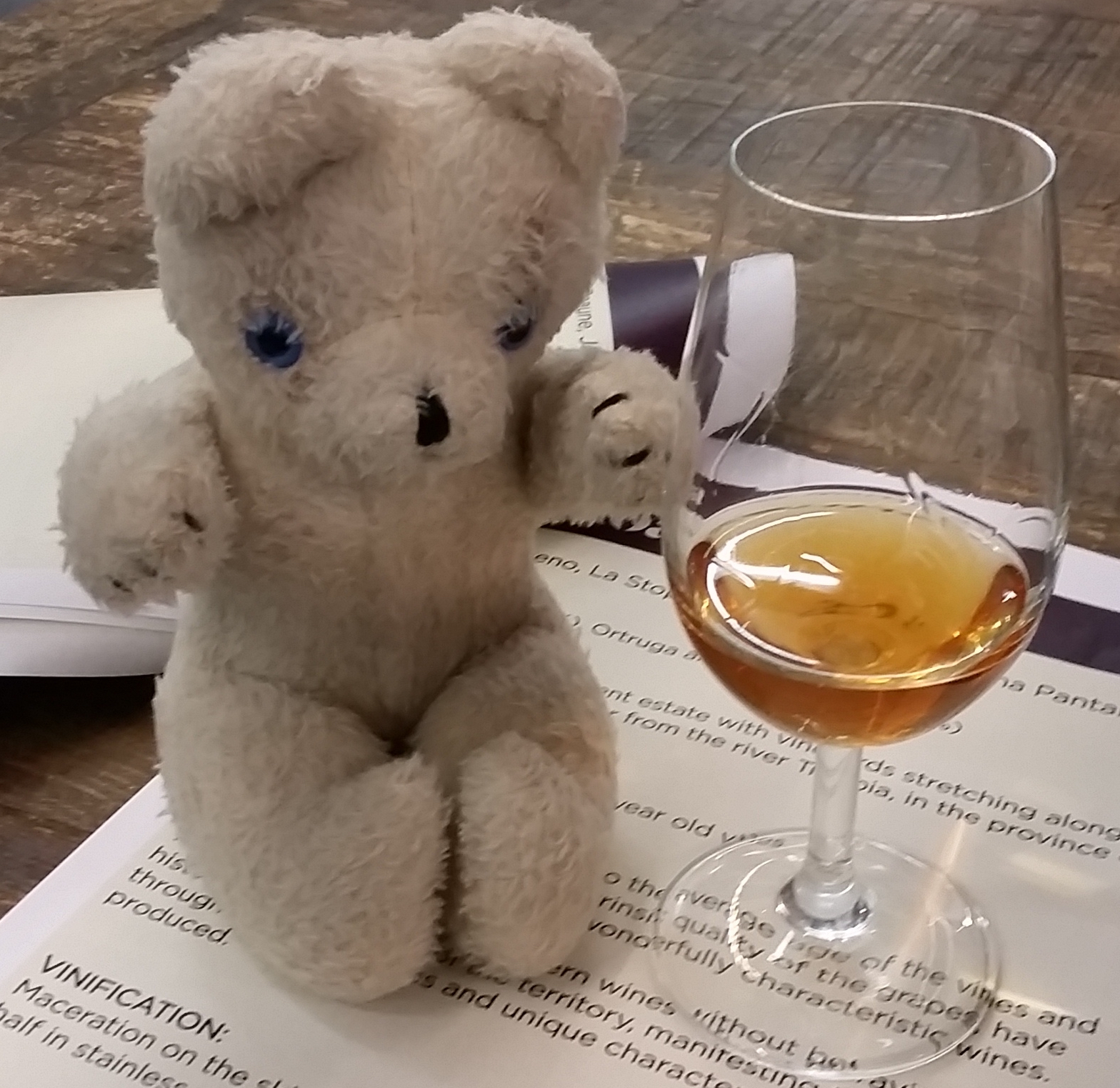
Bourgogne Rouge, Domaine des Vignes du Mayne, 2013 (biodynamic)
This Pinot Noir had an upfront almost fizzy acidity, but not too much. What really showed up was a very fruity, but earthy palate with soft tannins. We all agreed that it was light, as you would expect a Pinot to be, but quite lovely.
Alter, Côtes du Roussillon Villages, Cazes, 2011 (biodynamic)
This GSM blend (40% Grenache, 30% Shiraz, and 30% Mourvèdre) was very, very fruity, though it had some astringency with medium tannins. Although lovely to just sit and drink on its own, it would stand up pretty well to a steak, but its sweetness (and relative delicacy to some of the other more structured wines we tasted) would lend itself better to duck or pork perhaps. Oh, this is making me hungry!
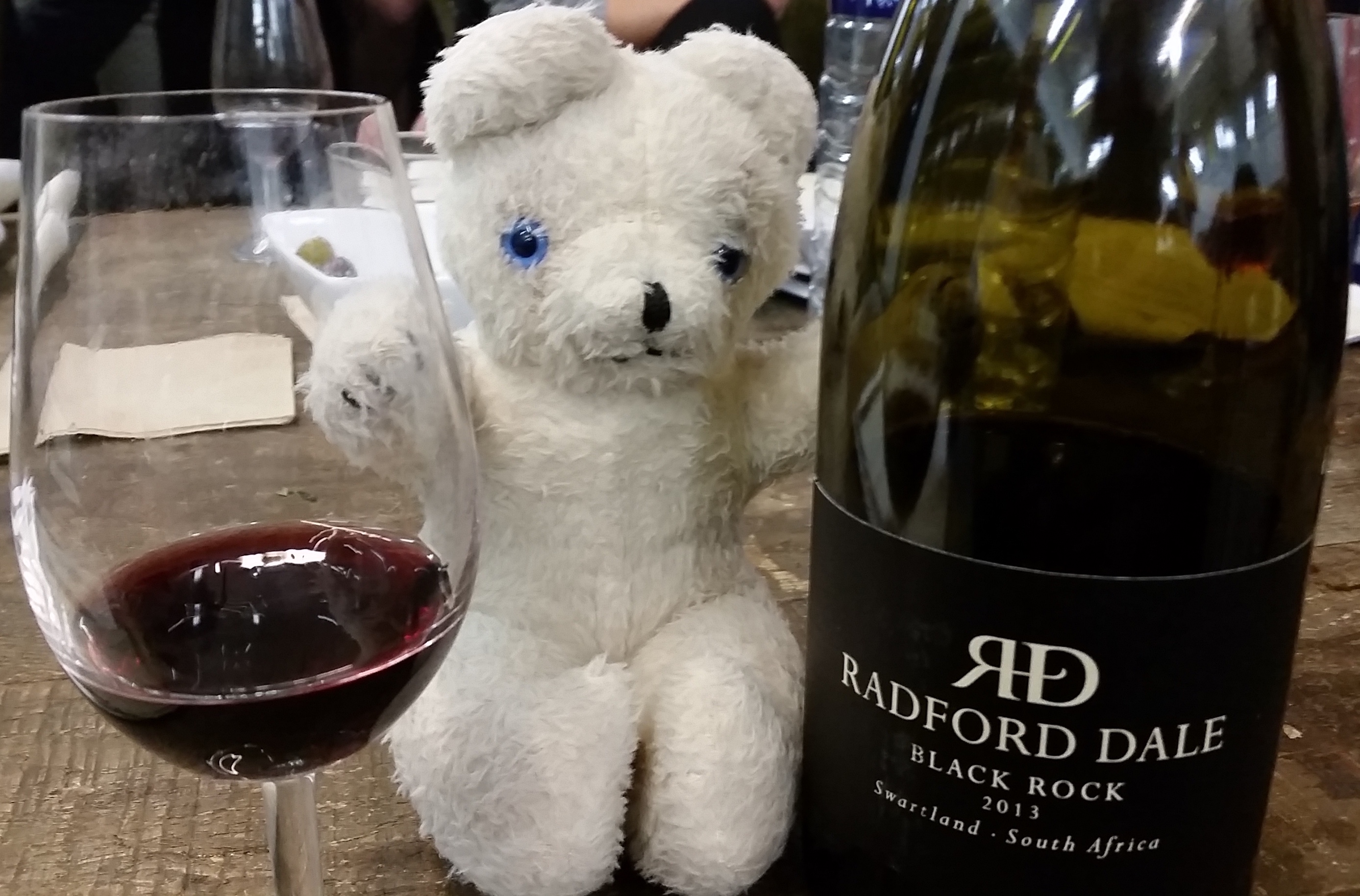
Black Rock, Radford Dale, Swartland, 2013 (organic)
Ah, this was my absolute favourite of the night! A fabulous blend of six grapes, it had excellent structure, a nice expression of black fruits, and was a beautifully balanced wine. This is the one I went back to for more (and more, and a little more still) at the end of the night! 🙂
Muscat de Rivesaltes Ambré, Cazes, 1997 (biodynamic)
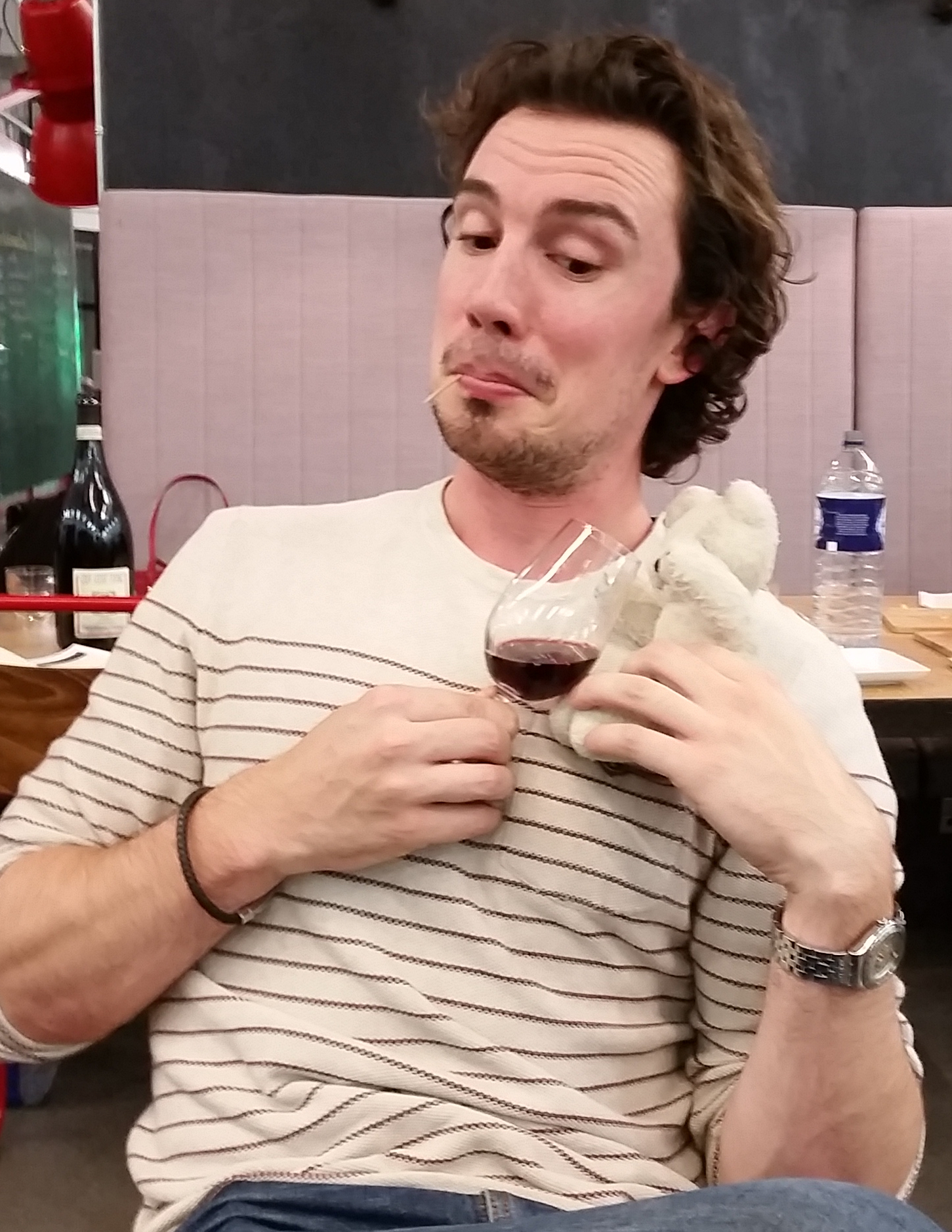
This beautifully aged dessert wine was my second favourite of the night (I went back for more of this one too!). It was 100% white Grenache, but a blend of different vintages, the youngest of which was from 1997. On the nose, it was sherry-esque, nice and dry like a fino. The palate was a completely different story though: sweet, raisony, and yeasty all at once. The yeasty side disappeared quite quickly, and I couldn’t taste it at all by the third sip. Absolutely lip-smackingly luscious!
And then?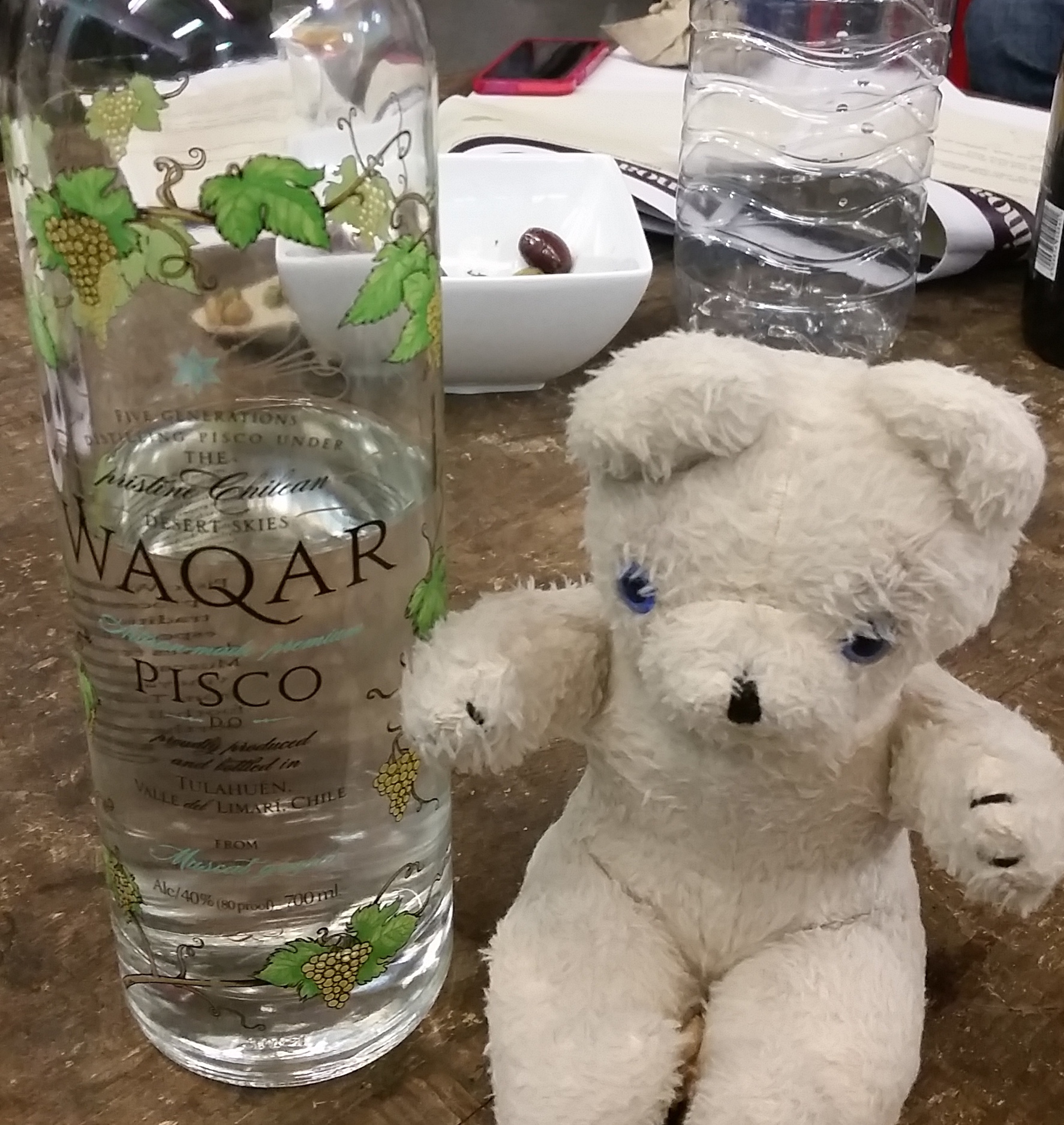
Once everyone had found their favourite wines and polished off the last of them, Javi—one of the guests at the tasting—offered us a taste of Pisco. Who were we to say no? Pisco is a Chilean brandy made from grapes and distilled into a 40% spirit. Wow, it was full of flavour and amazingly smooth! And that is where my memory starts to fade…
All in all, a wonderful night discovering new artisanal wines and making fabulous new friends!


Thanks again to Cyrus and Greg for a fun evening.
Until next time, big bear hugs from Little Ted xx
 Little Ted's Food & Wine Adventures
Great article! So happy you enjoyed the event and the wines!
Just for info, the Radford Dale Black Rock actually got 5 stars on the famous Platter Guide, the highest distinction! So congrats on your great palate 🙂
LikeLiked by 2 people
Great to hear my palate is in tune! 🙂 Thanks again for a great event, very much looking forward to the next one!
LikeLike